

Difference between surface grinding and cylindrical grinding

In this article
The difference between surface grinding and cylindrical grinding comes down to three things: the geometry being ground, how the workpiece is held and what type of accuracy is controlled.
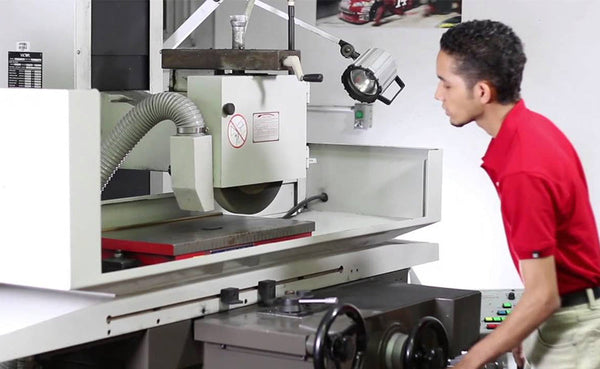
Surface grinding is used to produce flat faces (parallelism, flatness, thickness), normally working on a magnetic chuck or a mechanical fixture.
Cylindrical grinding is used for external or internal diameters (roundness, cylindricity, concentricity), rotating the workpiece and/or the grinding wheel.
In the workshop, choosing correctly is not a minor detail: it changes the tooling, the set-up time, the risk of thermal grinding burn and the type of final measurement (outside micrometer, bore gauge, dial indicator on V-blocks, etc.).
Below we put this into practice with examples and practical criteria.
What is grinding and why is it used
Grinding is an abrasive machining process designed to finish or correct workpieces when you need to:
- Improve surface finish.
- Hold tight tolerances.
- Correct distortion after heat treatment.
- Achieve functional geometries (bearing faces, seats, shafts, bores).
If you want an overview of machines and variants, you can read more in grinding machines: how they work and types.
Surface grinding: what it does and how it works
Surface grinding is used when you need a workpiece to end up with a truly flat face, with a good finish and fine dimensions.
It is not meant to “remove a lot of stock”, but to leave the surface perfect: seating well, holding dimensions and free of warping.
In the workshop it typically appears on parts such as plates, shims, guides, vice jaws or toolholders, above all when a thickness has to be adjusted or two faces have to end up parallel.
It is typical when a part “looks” flat to the naked eye but starts causing problems when measured or mounted because it does not seat evenly.
Workholding and set-up
And this is where the key lies: almost everything is decided in the workholding.
- Magnetic chuck (ferromagnetic parts): quick and repeatable.
- Vices, clamps or fixtures: for non-magnetic parts or complex geometries.
- Supports and shims: to stop the part from “bridging” and coming out lacking flatness.
Cylindrical grinding: what it does and how it works

Cylindrical grinding focuses on surfaces of revolution: external diameters (OD) and internal diameters (ID).
Typical geometries
- Shafts, pins, rollers, drive shafts.
- Bushes and bores (internal grinding).
- Bearing seats where concentricity and finish matter a great deal.
How the workpiece is held
Depending on the accuracy required and the shape of the part:
- Between centres: very common for shafts; it helps control coaxiality.
- Chuck / collet: quick for batch work, but you need to watch for eccentricity.
- Steady rests: when the shaft is long and flexible, to avoid vibration and taper.
If you are comparing machines or configurations, this reading complements it well: features of cylindrical grinders.
Key differences between surface and cylindrical grinding (direct comparison)
| Criterion | Surface grinding | Cylindrical grinding |
| Resulting surface | Flat | Of revolution (OD/ID) |
| Main movement | The wheel rotates; the table moves the workpiece | The wheel rotates and the workpiece usually rotates too |
| Typical workholding | Magnetic chuck, clamps, fixtures | Between centres, chuck/collet and steady rests |
| Dimensional control | Thickness, flatness, parallelism | Diameter, roundness, cylindricity, concentricity |
| Common risks | Bridging from poor workholding, grinding burn, marks | Taper, vibration, out-of-roundness, eccentricity |
| Typical parts | Plates, guides, bases, blades | Shafts, bushes, bearing seats |
What tolerances and grades are usually sought in each
Rather than promising universal figures (they depend on the machine, wheel, material and metrology), what is useful is to understand what is being controlled:
In surface grinding, the customer usually asks for flatness and parallelism (for example, so that a guide sits without “rocking”).
In cylindrical grinding, what rules is the coaxiality between diameters and the roundness (for example, to avoid vibration or uneven wear in a bearing).
Practical tip: if the part has several previous operations, first define which surface is the datum. In grinding, a poor datum results in a “beautiful” part that is out of function.
How to choose between surface and cylindrical grinding (decision criteria)
1) Geometry rules:
- Do you need a functional flat face? → Surface grinding.
- Do you need a high-accuracy diameter or a seat? → Cylindrical grinding.
2) Which dimension is critical
- If the final thickness and parallelism matter to you: surface grinding.
- If the diameter and its concentricity with other areas matter to you: cylindrical grinding.
3) Length, rigidity and tendency to vibrate
- Long, slender parts: cylindrical grinding may require steady rests or a pass strategy to avoid taper and chatter.
- Thin plates: in surface grinding, beware of internal stresses and workholding (avoid the part “sticking” and then distorting when released).
4) Material and condition (hardened, previously ground, etc.)
In both, the risk of grinding burn increases with hard materials, aggressive passes or poor cooling.
If you are coming from heat treatment, plan your passes and timing: the aim is not to “remove stock quickly”, it is to arrive stable.
Common mistakes that cost accuracy (and how to avoid them)
In surface grinding
- Clamping without cleaning the table/part: a tiny bit of swarf creates a flatness error.
- Insufficient magnetic hold or a part with little support: vibration and marks appear.
- Not letting the temperature stabilise on large parts: the measurement changes during the process.
In cylindrical grinding
- Damaged or poorly lubricated centres: they cause eccentricity and a poor finish.
- Poorly adjusted steady rest: it marks the part or induces taper.
- Measuring without repeating the position: on critical diameters, always measure with a consistent method (same pressure, same area, clean part).
What if my part has both flats and diameters?
This is common on shafts with bearing faces, flanges or “bush with a face”-type parts. In these cases:
Define the datums (which face/diameter governs the final assembly).
Decide the order so as not to “undo” what has already been achieved (for example, grinding a flat bearing face before finishing the critical diameter, or the other way round depending on the clamping available).
Ensure consistent metrology: a perfect diameter is no use if the bearing face is not perpendicular to that axis.
If you are weighing up a machine or a process
When a workshop hesitates between a surface grinder or a cylindrical one, it is normally not down to theory, but to the mix of parts, set-up times and technical support. If you need to relate it to your type of work (moulds, maintenance, short runs, etc.), this guide by industry can help: which machine tool your industry needs.
And if you want to compare grinding options in conventional machinery with a practical workshop approach, see conventional grinding machines: precision for machining.
Frequently asked questions
What is the difference between surface grinding and cylindrical grinding?
Surface grinding produces flat faces and controls flatness, parallelism and thickness; the wheel rotates and the table moves the workpiece, which is normally held on a magnetic table or with clamps. Cylindrical grinding works external and internal diameters and controls roundness, cylindricity and concentricity; the workpiece usually rotates and is held between centres, in a chuck or collet, or with steady rests.
When is surface grinding preferable and when cylindrical grinding?
Geometry decides. If you need a functional flat face or the critical factor is the final thickness and parallelism, surface grinding: plates, guides, shims, bases or vice jaws. If you need a high-precision diameter, a seat or concentricity with other areas, cylindrical grinding: shafts, pins, rollers, bushes and bearing seats.
What is grinding a workpiece for?
Grinding is an abrasive machining process used to finish or correct parts: it improves the surface finish, achieves tight tolerances, corrects the distortion left by heat treatments and produces functional geometries, such as bearing surfaces, seats, shafts or housings. It is not intended for removing a lot of material, but for leaving the surface and dimensions exact.
What mistakes cause a loss of accuracy in grinding?
In surface grinding: clamping without cleaning the table and the workpiece, because even the smallest speck of swarf spoils flatness; working with too little magnetism or too little support, which causes vibration and marks; and not letting the temperature stabilise on large parts. In cylindrical grinding: using damaged or poorly lubricated centres, setting the steady rest badly and measuring without always repeating the same position, pressure and area.
Keep reading
Articles →

Looking for machinery for your workshop?
We will advise you with no obligation: a demonstration at our premises, commissioning and our own in-house service and support.