

Which machine tool does your sector need? Technical guide by industry

In this article
Which machine tool does your sector need? Technical guide by industry
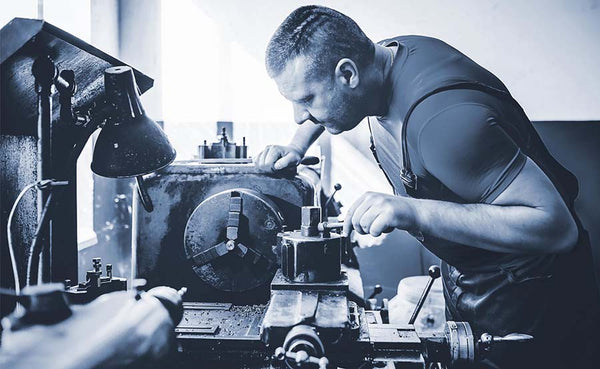
Choosing the right machinery is not just a matter of budget; it is a strategic decision that defines the productive capacity of your workshop. After 25 years as manufacturers and distributors, at Heller Maquinaria we have seen that a lathe that is perfect for an educational centre can be inadequate for a shipyard workshop, and vice versa.

Every industrial sector has critical requirements for accuracy, robustness and versatility. Below, we break down which conventional machinery is the most suitable for the key industries and how to avoid the most common buying mistakes.
1. Industrial maintenance: versatility above all
In maintenance, uncertainty is the norm. You do not know which part will break tomorrow, so you need machines capable of handling “a bit of everything”.
- Recommended machinery. Universal centre lathes and conventional turret milling machines. They are essential for making shafts, bushes or keyways in situ without depending on outside suppliers.
- Critical requirement: reliability and quick set-up. In maintenance, the downtime of a production line is costly. Conventional machinery allows an immediate response without the need for CNC programming.
- The common mistake. Buying machinery that is too light. A maintenance workshop needs robustness to machine hard steels or repaired welds without vibration.
2. Vocational training (FP): safety and teaching value
Vocational training centres have the responsibility of training future operators in the fundamentals of machining. Here, machinery is not about mass production, but about conceptual clarity and resistance to intensive use by inexperienced hands.
- Recommended machinery. CE series lathes (with variable-speed drive to make learning easier), robust pillar drills and universal milling machines.
- Critical requirement: safety and durability. The machines must have all the approved guards and be robust enough to withstand frequent operating errors.
- The common mistake. Jumping straight to CNC. Without understanding cutting, feed and forces on a manual machine, the student cannot become a competent programmer.
3. Automotive sector and ancillary workshops
Here we are talking about component repair, engine grinding or the manufacture of specific tooling.
- Recommended machinery. Flat surface grinders and high-precision lathes.
- Critical requirement: accuracy and finish. Tolerances in automotive are tight. Machinery with stable beds and high-quality bearings is required to guarantee concentricity and surface finish.
- The common mistake. Underestimating the importance of drilling. A low-vibration industrial pillar drill is vital for reaming and precise tapping operations.
4. Prototyping and R&D departments
For developing one-off parts or very short runs, conventional machinery is still unbeatable in cost and time.
- Recommended machinery. Toolroom milling machines and versatile lathes fitted with digital readouts (DRO).
- Critical requirement: direct control. The engineer or technician needs to “feel” the cut in order to adjust designs on the fly, something that the rigidity of CNC programming makes difficult in the early stages.
- The common mistake. Investing in CNC for simple one-off parts. Set-up and programming time usually exceeds manual machining time on simple prototypes.
5. Marine sector and heavy repair
This sector plays in a different league of size and weight.
- Recommended machinery. Large-swing lathes with long distance between centres, and high-capacity radial arm drills.
- Critical requirement: capacity and motor torque. Propeller shafts, large flanges and marine engine components are machined. The machine needs high torque at low revolutions.
- The common mistake. Ignoring after-sales service. With heavy machinery, a breakdown is critical. Having a partner like Heller, which guarantees technical support and spare parts, is vital for operational continuity.
Conclusion: analyse your workflow
Success in buying industrial machinery lies in aligning the technical specifications (swing, power, travels) with the daily reality of your workshop. Heller's conventional machinery offers the robustness and reliability needed to be the backbone of any of these sectors. Before deciding, consult experts who understand not only the machine, but your business.

Daniel Guzman
Frequently asked questions
Which machine tool does each industrial sector need?
It depends on their requirements for accuracy, robustness and versatility. In industrial maintenance, universal centre lathes and turret milling machines; in vocational training (FP), variable-speed lathes, pillar drills and universal milling machines; in the automotive industry, surface grinders and high-precision lathes; in prototyping, toolroom milling machines and lathes with digital readout; and in the shipbuilding sector, large-swing lathes and high-capacity radial arm drills.
What machinery does an industrial maintenance workshop need?
Above all universal centre lathes and conventional turret milling machines, to make shafts, bushes or keyways in the workshop itself without depending on external suppliers. What is critical is reliability and speed of set-up, because every line stoppage is costly. The usual mistake is buying machines that are too light: robustness is needed to machine hard steels or repaired welds without vibration.
Which machines suit a vocational training centre?
CE series lathes with variable speed drive, which make learning easier, robust pillar drills and universal milling machines. They must have all the approved guards and be robust enough to withstand frequent handling errors. It is best not to jump straight to CNC: without understanding cutting, feed and forces on a manual machine, the student does not become a competent programmer.
Why use conventional machinery for prototypes instead of CNC?
Because for one-off parts or very short runs it is still unbeatable on cost and time: on simple prototypes, setting up and programming a CNC machine usually takes longer than machining by hand. In addition, the technician controls the cut directly and can adjust the design on the fly. For this, toolroom milling machines and versatile lathes with digital readout (DRO) are recommended.
Keep reading
Articles → Machining and workshop
Heller Maquinaria recibe una ayuda INPYME 2026 de la Generalitat Valenciana
 Machining and workshop
Key advantages of choosing conventional machinery: reliability, durability and direct control
 Machining and workshop
Safety: good practice when operating Heller conventional machinery in the workshop
Looking for machinery for your workshop?
We will advise you with no obligation: a demonstration at our premises, commissioning and our own in-house service and support.