

Maintenance and lubrication of machine tools: how do you do it?

In this article
One of the fundamental points in the metalworking industry is the correct maintenance and lubrication of machine tools. Basically, because if this is not done continuously and properly, the machine will stop working or will work incorrectly. But what is the best way to maintain and lubricate these machines?
Why is it important to maintain and lubricate machines?
For a machine to work properly and safely, it is important that it undergoes regular checks and inspections that guarantee it is working in optimum condition. But, for the results of such an inspection to be satisfactory, it is important to carry out correct maintenance and lubrication of machine tools.
The importance of this procedure lies not only in obtaining favourable results in any inspections the machinery might undergo, but also in the fact that it is essential for extending the service life of the machines, and for production to be achieved effectively. In production, it is important not only to deliver the work requested on time, but also to reduce production costs; and if the machine tool is not in good condition and develops faults, this considerably disrupts its operation and, consequently, production.
In addition, a machine that does not receive correct maintenance can become a dangerous tool for its operators. It may develop faults that put the safety of a workshop's workers at risk. For this reason, all the machine tools in a workshop need to be checked, maintained and repaired where necessary.
Among the proven advantages and benefits of maintaining and lubricating machine tools are:
- Extending the service life of the machine.
- Safety for operators.
- Reducing production costs.
- Improving product quality.
- Improving the company's competitiveness with its customers.
- Responsiveness to possible breakdowns and faults, allowing problems to be solved quickly and efficiently.
Types of maintenance
Talking about maintenance means referring to an increase in the capacity of production lines that also ensures they operate with quality, safety and appropriate production costs.
When the metalworking industry began to boom, machine tools received corrective maintenance; that is, it was only necessary to clean the machine and give it the right lubrication. If the machine developed a fault, it was fixed and the machine carried on working. Basically it was simply breakdown repair. Although many metalworking companies still use this type of maintenance, preventive maintenance now exists and could reduce repair costs.
Preventive maintenance, which is one of the most recommended, consists of carrying out regular checks on the machine to detect what could fail and correct the problem before it happens. During these checks or inspections, the machine is cleaned, its parameters are adjusted, safety is checked and the lubrication of machine tools is also carried out. It consists of preventing possible faults before they occur and thus avoiding unexpected repairs on the machine that can hold up production lines.
There is also another maintenance system called predictive. It works in a similar way to preventive maintenance, but its mission is to detect possible breakdowns and defects in machines. That is, it seeks to solve a problem that has not yet become visible, to prevent the machine from stopping production unexpectedly.
Lubrication of machine tools
Lubrication is a type of machine tool maintenance, since it is essential for the proper operation of the machinery. The lubrication process for a machine is usually specified by its manufacturer: this will indicate not only the best lubricant for the machine, but also how often lubrication should be carried out, including the amount of lubricant and other guidelines for applying the fluid to the machine.
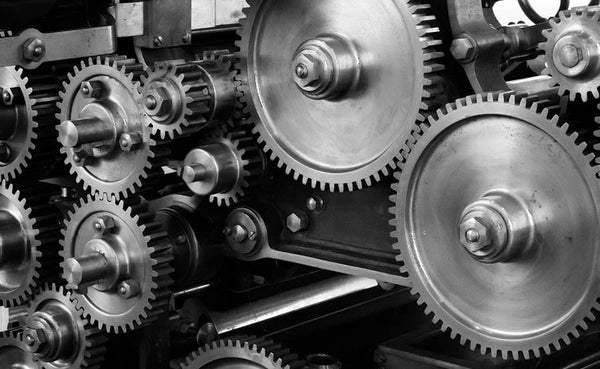
A machine tool is made up of many parts, but those that require proper lubrication are the gears, the shafts and the bearings. If these parts do not receive the maintenance they need, the machine risks stopping and, with it, halting production.
Who carries out machine maintenance?
Machine tool maintenance can be carried out by a specialist company (which may be the machine's own manufacturer), but it is also a task that is left to the machine's operator. For example, basic maintenance, which consists of cleaning the parts of the machine, is usually done by the operator who works with the machine. The person who carries out this maintenance work must be a qualified person who knows the machine and how it works, but who has also received appropriate training in cleaning.
Frequently asked questions
What are the benefits of properly maintaining and lubricating a machine tool?
It extends the service life of the machine, protects operator safety, reduces production costs and improves part quality and the competitiveness of the company. A machine without proper maintenance can fail, disrupt production and become a hazard to the people who work with it.
What is the difference between corrective, preventive and predictive maintenance?
Corrective maintenance repairs breakdowns when they occur. Preventive maintenance, one of the most recommended, consists of periodic inspections in which the machine is cleaned, its parameters are adjusted, safety is checked and it is lubricated, so that faults are corrected before they happen. Predictive maintenance aims to detect faults that are not yet visible, in order to avoid unexpected production stoppages.
Which parts of a machine tool need lubricating?
The parts that most need proper lubrication are the gears, the shafts and the bearings; if they do not receive it, the machine can stop and bring production to a halt. The manufacturer usually specifies the procedure: the most suitable lubricant, how often it must be applied, in what quantity and the rest of the application guidelines.
Who should carry out the maintenance of a machine tool?
It can be done by a specialist company, including the machine manufacturer itself, or by the operator who works with the machine, who usually takes care of the most basic maintenance, such as cleaning its parts. In any case, it must be a qualified person who knows the machine and how it works and who has the right training.
Keep reading
Articles → Machining and workshop
Heller Maquinaria recibe una ayuda INPYME 2026 de la Generalitat Valenciana
 Machining and workshop
Which machine tool does your sector need? Technical guide by industry
 Machining and workshop
Key advantages of choosing conventional machinery: reliability, durability and direct control
Looking for machinery for your workshop?
We will advise you with no obligation: a demonstration at our premises, commissioning and our own in-house service and support.