

Key advantages of choosing conventional machinery: reliability, durability and direct control

In this article
In an industrial environment where automation and CNC tend to dominate the conversation, it is legitimate to ask what place conventional machinery still has. For many workshops—from small companies to large maintenance departments—the answer is obvious: these machines have not only kept their relevance, but remain a strategic, profitable and operationally sound choice.

With more than 25 years in the sector, Heller Maquinaria has seen first-hand the practical, lasting value of conventional lathes, milling machines and drilling machines. Beyond any emotional factor, there are concrete benefits that make these machines a safe, long-term investment.
1. Proven reliability and durability
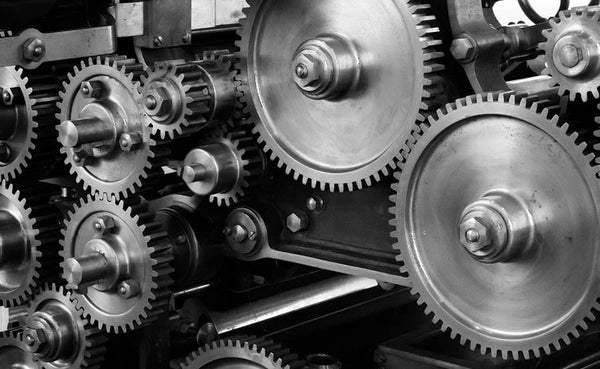
Solidity is one of the hallmarks of Heller machinery. Its design is based on robust cast-iron beds, large-sized components and simple, proven mechanics. This architecture is no accident; it is designed to deliver stable performance and a long service life.
Compared with highly electronic systems, which depend on multiple sensors and delicate elements, mechanical simplicity reduces the chance of breakdown. These machines are built to absorb vibration, work long shifts and maintain their accuracy even after years of service. Investing in Heller machinery means betting on an asset that stands the test of time.
2. Direct control: the operator's experience makes the difference
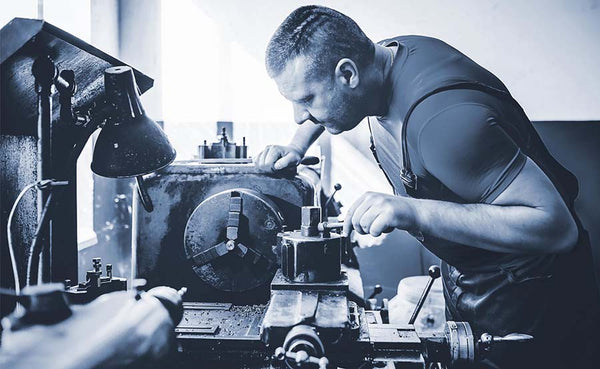
One of the most valued advantages of conventional machinery is the direct relationship between the operator and the machining process. Here, the professional does not supervise a program: they direct the operation.
-
Tactile feel. The operator senses the material's response through the handwheels, hears the cut and watches the swarf. This immediate sensory feedback makes it possible to adjust parameters instantly, achieving high-quality finishes that cannot always be reproduced through programmed instructions.
-
Operational flexibility. There is no need to program or configure sequences beforehand. The operator's experience allows them to adapt quickly, deal with the unexpected and carry out complex jobs with agility.
3. Lower complexity, accessible maintenance and reduced costs
Simple mechanics make maintenance direct and economical. Identifying and fixing faults is usually quick and can be done by the workshop's own technical staff, without depending on specialised outside services. Lubrication, checking and adjustment routines are clear and help minimise costs and downtime.
4. A sensible initial investment
The investment required to buy a Heller conventional machine is considerably lower than for an equivalent CNC machine. This favours entrepreneurs starting out and workshops that want to expand capacity without committing large resources. It is a direct route to profitability and a way of strengthening the production infrastructure without straining available capital.
5. The right choice for specific applications
Conventional machinery does not aim to replace CNC; it complements it. It is especially effective in situations where programming brings no advantage:
-
Prototypes and one-off parts. Making a single unit manually is usually quicker and more efficient.
-
Repairs and maintenance. Ideal for producing made-to-measure parts or replacing components immediately.
-
Die making and craft-level precision work. When the operator's fine adjustment is key.
-
Technical training. It remains essential for teaching the principles of machining.
In conclusion, opting for Heller conventional machinery is a decision that prioritises reliability, operational independence and a balanced cost structure. It is the right choice for workshops that value robustness, versatility and the technical knowledge of their team.

Daniel Guzman
Frequently asked questions
Why is conventional machinery reliable and durable?
Because it is based on robust cast-iron beds, large components and simple, proven mechanics. Compared with highly electronic systems, which depend on multiple sensors and delicate elements, this simplicity reduces breakdowns. As a result, these machines absorb vibration, withstand long working days and maintain their accuracy after years of service.
What are the advantages of direct operator control on a conventional machine?
The operator directs the operation instead of supervising a program: they feel the response of the material through the handwheels, listen to the cut and watch the swarf, and adjust the parameters instantly. This allows high-quality finishes that cannot always be reproduced with programmed instructions, and makes it possible to adapt quickly to unforeseen events without programming sequences beforehand.
Is maintaining a conventional machine cheaper?
Yes. Its simple mechanics make maintenance direct and economical: faults are usually identified and resolved quickly, and the workshop's own technical staff can handle them without depending on specialised external services. The lubrication, checking and adjustment routines are clear, which reduces costs and downtime. In addition, the initial investment is considerably lower than that of an equivalent CNC machine.
For which jobs is a conventional machine better than a CNC one?
Conventional machinery does not replace CNC, but complements it where programming offers no advantage: prototypes and one-off parts, which can usually be made faster by hand; repairs and maintenance, to make custom parts or replace components immediately; die making and precision craft work; and technical training, to teach the principles of machining.
Keep reading
Articles →
Looking for machinery for your workshop?
We will advise you with no obligation: a demonstration at our premises, commissioning and our own in-house service and support.