

The essential role of Heller conventional machinery in vocational and technical training

In this article
The metalworking and maintenance industries need qualified professionals. The demand for specialised technicians with a deep knowledge of manufacturing processes is constant. But how is a true machining professional forged?
While CNC technology has revolutionised mass production, the foundation of every great technician lies in mastering the basic fundamentals of the trade, and that knowledge is acquired, above all, on a robust and reliable conventional machine.
At Heller, we are firm advocates of quality technical training. That is why our machines are a constant presence in vocational training centres, technical institutes and training workshops across the country. We are a key link in the education of future generations of professionals.
The importance of getting a “feel” for machining
Operating a numerically controlled (CNC) machine without understanding the basic principles of machining is like knowing how to enter a destination into a satnav without knowing how to read a map. CNC is an extremely powerful productivity tool, but the operator's brain and intuition remain the decisive factor in solving problems, optimising processes and making quality parts.
Conventional machinery is the perfect school for developing that intuition. On a conventional Heller lathe or milling machine, the student is not a mere supervisor but the protagonist of the process:
- They must select the cutting speed suited to the material, not just enter a value on a screen.
- They must feel the resistance of the material through the handwheels and levers, learning to interpret the sounds and vibrations of the machine.
- They must make the adjustments manually, developing a coordination and manual dexterity that are irreplaceable.
This sensory, hands-on learning creates a solid, deep knowledge base that sets a simple operator apart from a qualified, resourceful technician.
Why is Heller machinery ideal for the educational environment?
Training centres need not only functional machinery, but equipment that is instructive, safe and able to withstand intensive use by trainees.
1. Learner-proof robustness and reliability:
Our machines are built to last. Their compact design, with cast-iron beds and high-quality components, guarantees the durability required in an educational environment, where use is constant and mistakes are part of the learning process. It is a long-term investment in the quality of teaching.
2. Mechanical clarity and teaching value:
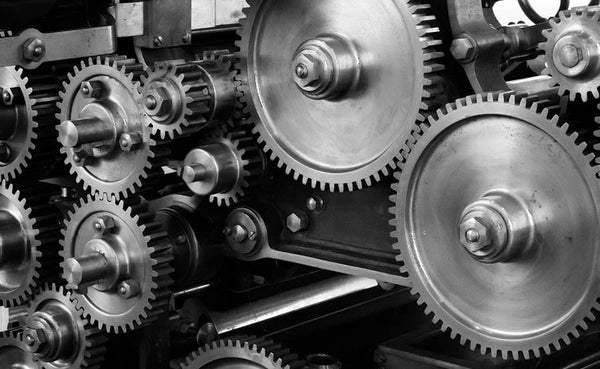
A Heller machine is an open book of industrial mechanics. Unlike CNC machines, on a conventional lathe or milling machine you can see the gears, the leadscrews and the levers. Students can physically understand how motion is transmitted and how their actions translate into a functional part. This transparency is essential for demystifying the technology and absorbing mechanical concepts.
3. Safety as a priority:
We understand that learning must take place in a safe environment. Our machines are equipped with all the necessary safety features: emergency stop mushroom buttons, microswitches on the guards, and an ergonomic design that facilitates safe operation. This allows instructors to teach safety protocols on real, industrial-grade equipment.
4. Versatility for a complete curriculum:
From a simple pillar drill to a lathe or milling machine, our machine tool catalogue allows us to equip a complete training workshop, capable of covering all the basic and advanced operations of conventional machining.
Heller machinery: a partner for the training of the future
Investing in technical training is investing in the future of our industry. By choosing Heller machinery, training centres not only acquire reliable, safe equipment, but also give their students the right tools to build a solid professional foundation. A student who has mastered the art of machining on a conventional Heller machine will be better prepared to understand and optimise any manufacturing process, whether conventional or CNC.
We are proud to be a technology partner for education, helping to train the professionals who will lead the workshops of tomorrow with knowledge, skill and, above all, a passion for a job well done.

Daniel Guzman
Frequently asked questions
Why do people learn to machine on conventional machines before CNC?
Because on a conventional machine the student is at the centre of the process: they choose the cutting speed according to the material, feel its resistance through handwheels and levers, interpret sounds and vibrations and make the adjustments by hand. In this way they develop the intuition and skill they later need to solve problems, optimise processes and make quality parts, with CNC too.
What characteristics should the machinery in a training centre have?
It must be educational, safe and able to withstand intensive use by trainees. A robust construction is advisable, with cast iron beds, because in the classroom use is constant and mistakes are part of learning. It also helps if it is mechanically clear: on a conventional lathe or milling machine you can see the gears, the spindles and the levers, and you can understand how motion is transmitted.
What safety features should a training machine have?
It should have emergency stop buttons, microswitches on the guards and an ergonomic design that makes safe operation easier. With these features, learning takes place in a safe environment and instructors can teach safety protocols on real industrial-level equipment.
Why is Heller conventional machinery used in vocational training?
Heller conventional machines are found in vocational training centres, technical institutes and workshop schools because they are robust, educational and safe. The range runs from the pillar drill to the lathe and the milling machine, which makes it possible to equip a complete training workshop and cover all the basic and advanced operations of conventional machining.
The machines in this article
| Range | Models | Key data | View the models |
|---|---|---|---|
 Drilling machines |
17 | Drilling capacity 25–70 mm · Power 0,75–5,5 kW | View the models → |
Keep reading
Articles → Machining and workshop
Heller Maquinaria recibe una ayuda INPYME 2026 de la Generalitat Valenciana
 Machining and workshop
Which machine tool does your sector need? Technical guide by industry
 Machining and workshop
Key advantages of choosing conventional machinery: reliability, durability and direct control
Looking for machinery for your workshop?
We will advise you with no obligation: a demonstration at our premises, commissioning and our own in-house service and support.