

How to choose a combination milling machine for wood?

In this article
A combination milling machine for wood makes it possible to carry out multiple jobs that would otherwise have to be done separately, using a special machine for each of them. In addition, the use of the combination milling machine is especially recommended for joinery workshops with very limited space.
What is a combination milling machine like?
A combination milling machine is able to bring all the machines together in a single unit; this makes it possible to carry out every kind of woodworking job. This type of machine works thanks to a motor with enough power to perform the machine's many tasks.
Before choosing a combination milling machine it is important to know the number of tasks you need to carry out with it; once this has been determined, you should choose a machine that can offer you two, four or more jobs, and check the accessories it includes. For example, if you want one of these machines to do only milling and slotting, because that is what you do most in your workshop, you do not need a machine that performs more than two or three functions at the same time.
A combination milling machine can do, for example, surface planing, thicknessing and slotting, and can include a table saw, a milling machine and a tenoner. The options on the market are quite wide and suit the user's budget. And what do these functions involve?:
- Surface planing, so that the faces of a board are straight.
- Thicknessing, an operation carried out after surface planing.
- Sawing and trimming, a function that, as its name suggests, makes it possible to cut the raw material precisely, to the desired dimensions.
- Milling, which makes it possible to machine the workpiece by removing swarf or waste, while the workpiece turns on its vertical axis. This operation is used to shape a workpiece.
These are the most basic operations that can be carried out on a combination milling machine, but there are other, more specialised jobs that wood requires. Here we find, for example, tasks that call for a tenoning carriage (for making tenons); a slotting machine for assembly in series, as well as a circular saw, ideal for cutting boards that need a much more precise finish.
Size and space required
The combination milling machine is usually of reduced dimensions, which allows a degree of portability and takes up little space. For example, a small combination milling machine requires barely one metre of space to operate; on the other hand, there are machines that can measure up to three metres with the table unfolded. You may also find machines that weigh approximately 50 kg and others that can reach a tonne.
The price of these machines varies according to the number of functions you need, as well as the size you choose. On the market, however, it is possible to find combination milling machines for workshops that are just starting up and cannot make a large investment in buying this machinery.
Power
The power of the combination milling machine you choose should depend on the number of operations you want to carry out. You can find machines with power ratings between 1,000 W and more than 3,000 W. If you are looking for a small, portable machine suitable for simple tasks, you need a machine with a power rating between 1,000 and 1,500 W. Professional joinery workshops will require a machine with high-power motors that allow all kinds of wood to be worked.
Machine requirements according to the jobs to be done
Every job is different, and before choosing a combination milling machine, you need to know each one of them in detail and what it requires in order to be carried out without major problems. Ideally, the power of the machine should be sufficient and the machine should not switch off or break down while you are using it. The machine, in itself, is already perfect for milling operations; that is, it has the right conditions for machining by swarf removal. In addition to milling, as we have already mentioned, this machine can do other tasks, but how do you know whether the machine is the right one for surface planing, thicknessing, etc.?
Surface planing and thicknessing
For surface planing and thicknessing, the machine must have a table of the right width to allow large workpieces to be worked. The size of the table varies considerably between the simplest machines and professional ones; a small machine may have a 150 mm table; this size changes considerably on more professional machines.
Sawing
For greater convenience, this operation requires a sliding table mounted on rails. This allows wood to be cut more precisely. The table for sawing should be easy to unfold and fit and be located as close as possible to the saw blade. The diameter of the blade also plays an important role.
Profiling
If what you are looking for is to do small joinery jobs, the milling cutters (cutting tools) that this machine already includes are more than enough for profiling or tenoning work.
Slotting
To slot workpieces on a combination milling machine, you will need to look at the clamping capacity of the chuck in order to know what type of bits will be used. The larger the diameter, the faster the machining.
Frequently asked questions
What is a combination woodworking machine?
It is a machine that brings several woodworking machines together in a single unit, so that it can do jobs that would otherwise need a separate machine for each: surface planing, thicknessing, sawing, milling, grooving or tenoning, depending on the model. It runs on a motor with enough power for all its tasks and is especially recommended for carpentry workshops with little space.
How do you choose a combination machine?
First you need to define how many tasks, and which ones, you are going to do with it, and choose a machine that offers those functions (two, four or more) and the accessories required. If you are only going to mill and groove, you do not need a machine with many functions. Then check the power, the width of the table for surface planing and thicknessing, and the space available in the workshop.
What power does a combination machine need?
It depends on the number of operations you want to carry out. There are machines from 1,000 W to more than 3,000 W. For a small, portable machine intended for simple tasks, between 1,000 and 1,500 W is enough; a professional carpentry workshop needs high-power motors that can work all kinds of wood without the machine cutting out or breaking down.
How much space does a combination machine take up?
It is usually a machine of small dimensions, which takes up little space and offers a degree of portability. A small model needs barely a metre of space to work, while some machines, with the table extended, can measure three metres. Weight also varies widely: from around 50 kg to one tonne.
Keep reading
Articles →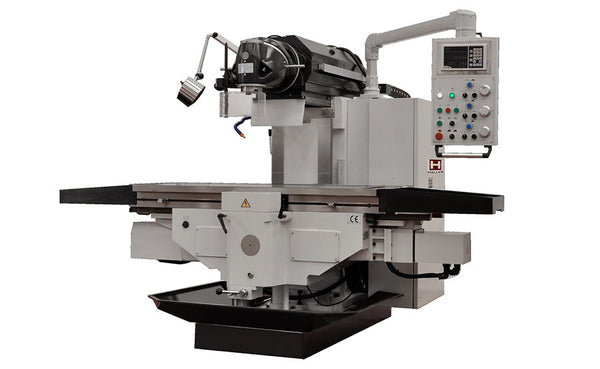


Looking for machinery for your workshop?
We will advise you with no obligation: a demonstration at our premises, commissioning and our own in-house service and support.